Sunday, 5 August 2018

VEHICLES # 9.


1936 AUSTIN 18 SALOON.
 
This car was first registered on 20th August 1936 with Grimsby Borough Council. It had only one previous owner who used it just during the summer months before being acquired by Mr Le Tall, one of the society's founder members. It is fully restored to its original condition.
 
~~~~<<<<>>>>~~~~


1949 ALBION HD57 6-WHEEL LORRY.
 

Originally operated by Smiths Crisps. A now rare vehicle, this type utilises Albion's own 6-cylinder diesel engine.
 
 
~~~~<<<<>>>>~~~~


1942 LEYLAND MERRYWEATHER 100 foot TURNTABLE ESCAPE.
 
Fitted with a five litre ( 33hp ) petrol engine, four speed crash gearbox and vacuum operated and assisted brakes. On the outbreak of war in 1939, all new and uncompleted chassis were frozen by the ministry of supply. GLW419, a Leyland TD7 double deck chassis, was released by the ministry in 1942 and fitted with a petrol engine and a Merryweather body. As a fire engine it was delivered to the National Fire Service in Lincoln, later to become the Lincoln City Fire Brigade, who presented it to the LVVS in 1968. It weighs 9.5 tons, has a top speed of 55mph and a petrol consumption of 6mpg.
 
~~~~<<<<>>>>~~~~


AUSTIN 7.
 
Built at Longbridge near Birmingham in 1933 by Sir Henry Austin. Price new - £118. Engine - four cylinder, water cooled, detachable head. The crankshaft has roller bearings, aluminium pistons. Body - adjustable bucket seat for driver, bucket seat for passenger is hinged to allow entrance to the rear seats. Folding hood and sidescreens on touring model. Ample tool accommodation. Fuel supply - by gravity from four gallon tank. Ignition - by coil and battery. Cooling - radiator and fan.
 
~~~~<<<<>>>>~~~~


FIAT 500.
 
~~~~<<<<>>>>~~~~


BEDFORD TOWER WAGON.
 
Chassis- Bedford Olaz. Bodywork by Eagle. Original owner- Rotherham Corporation Transport. Year built- 1949. The purpose of the tower wagon was to provide an easy means of access to the overhead wires. Unlike trams, which returned the current through the rails and thus needed only one overhead wire, Trolley Buses took and returned their current from a pair of overhead wires a foot or so apart. The wagon also had a workshop and a supply of spares so it could tender `first aid` to any trolley buses that had failed in service. FET 195 was new to Rotherham in 1950 and was active for about fifteen years. After the end of the service in 1965, FET performed general duties - eg. access to a prominent clock in Rotherham town centre and was also used as an apprentice training vehicle. Following a period of inactivity it was sold for preservation in the late 1970s and acquired by SBMT in 1984 when the former owner donated her for continued preservation.
 
~~~~<<<<>>>>~~~~


FORDSON MAJOR TRACTOR.
 
 
~~~~<<<<>>>>~~~~


1930s AUSTIN BIG SEVEN.
 
Awaiting restoration.
 
~~~~<<<<>>>>~~~~
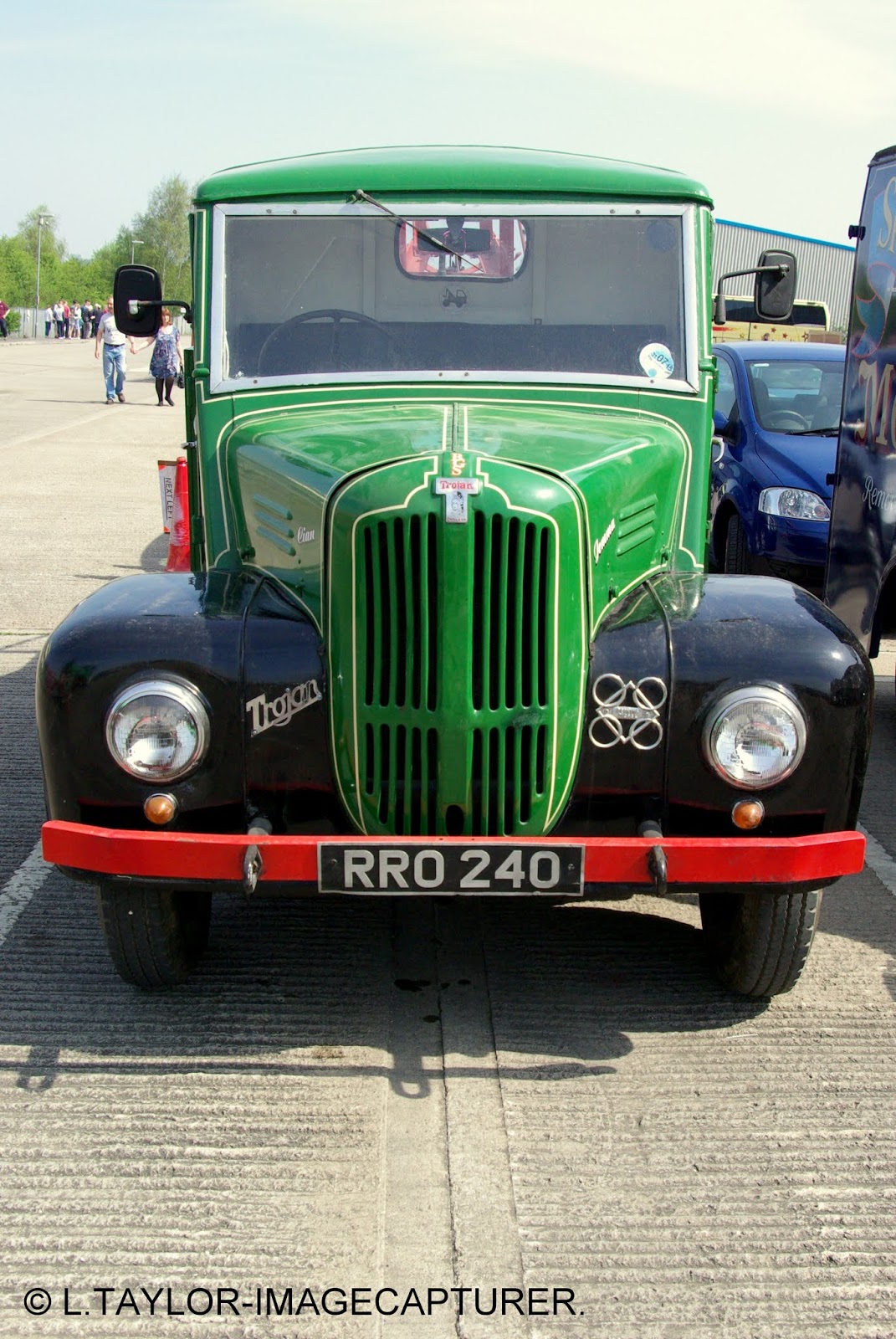


TROJAN TOWING TRUCK.
 
 
~~~~<<<<>>>>~~~~


LEYLAND COMET LORRY.
 
Bodywork- Sheffield Transport. Original owner- Sheffield Corporation Transport. Year built- 1953. The chassis was purchased new by Sheffield Corporation Transport department and the body was built in the Queens Road Works. The lorry was intended as a general purpose vehicle. It was originally painted oxford blue, fitted with a toolbox under the near side of the body and a canvas tilt extending five foot from the cab. Duties included transporting temporary bus stops to Bramall Lane and Hillsborough on home football match days and carrying engines regularly to and from Leyland. It eventually became a HGV driver - training vehicle and was inherited by SYPTE on the demise of SCTD. In 1985-86 it was partly restored as an exercise by SYT apprentices who produced the present `show` body, made the front wings flush with the bonnet sides and reconditioned the engine. It was then left on permanent display at the museum but was not used after 1988. On deregulation it passed into ownership of Mainline. In 1997 it was prepared for use and rallied regularly by its current owners who purchased it in March 2000. A `rolling restoration`, undertaken over a six year period, has resulted in an excellent display vehicle capable of working for its living.
 
~~~~<<<<>>>>~~~~


BEDFORD HA 110 BRITISH TELECOM VAN.
 
 
~~~~<<<<>>>>~~~~


Sunday, 22 July 2018

CASTLE HILL and VICTORIA TOWER.


CASTLE HILL.
 
Castle hill is a special landmark for many people. It is an impressive example of an ancient iron age hill fort which dates back over 4000 years. As a scheduled ancient monument it is protected by law as an archaeological site of major national importance. On top of the hill stands Victoria Tower which was built in 1897 to commemorate queen Victoria`s diamond jubilee. The network of accessible footpaths around the site enable visitors to enjoy this magnificent monument and the spectacular panoramic views of the area. Castle Hill is in Almondbury overlooking Huddersfield in the metropolitan borough of Kirklees, west Yorkshire, England.
 
 
THE VICTORIA TOWER.
 
In 1897 queen Victoria had reigned over the British Empire for 60 years. The people of Huddersfield celebrated this unique event by building this tower and called it the Jubilee Tower. After getting permission from the queen herself, it`s name was changed to the Victoria Tower. It was opened on 24th June 1899 by the Earl of Scarborough, watched by a crowd of about 20,000 people. Unfortunately the special gold key given to the earl to open the door wouldn't work, but after a short delay a more practical key was found. A choir of forty fine local singers sang from the top of the tower, but as the wind was particularly strong that day, no one in the crowd below could hear them. The tower is built of stone quarried nearby at Crosland Hill. The tower is 32.3 metres high. The top is 350 metres above sea level. In 1960, the height of the tower was reduced for safety reasons. In 1977 a light was put at the top to mark the silver jubilee of queen Elizabeth II. There are 165 steps to climb to reach the viewing platform.
 
TOWER TRAGEDY.
 
On the 14th November 1899, Mr Edgar North fell to his death from the top of the turret. Although suicide was mentioned it was thought that the victim had most likely died as a result of an accident, brought about by drinking five `three penny specials` at the Castle Hill hotel. Each `special` included two beers and three whiskies. After this accident, fencing was put around the viewing platform.


VIEWS FROM CASTLE HILL.


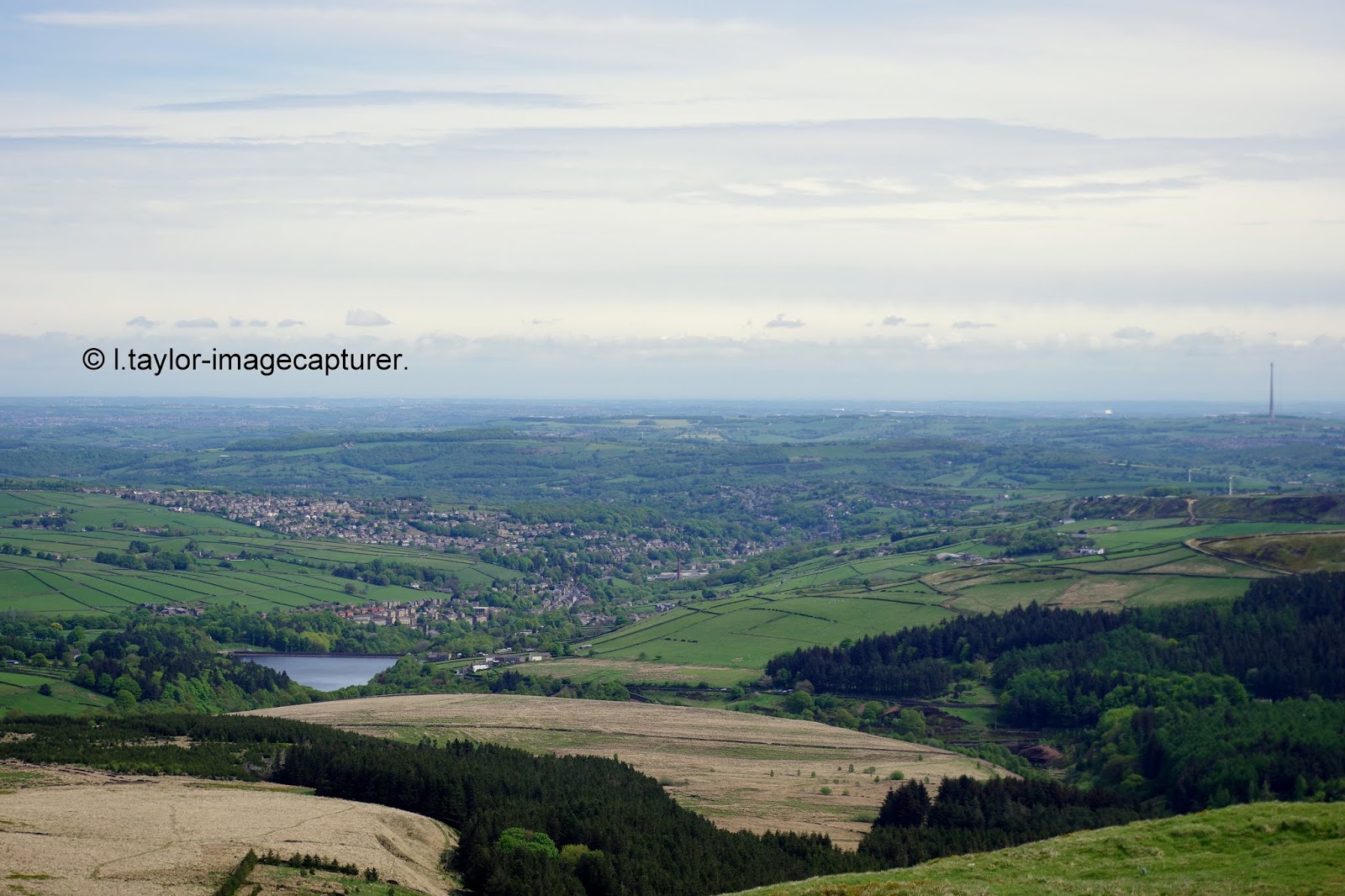
View of Huddersfield.
 
 
~~~~<<<<>>>>~~~~


Sunday, 15 July 2018

TRAMS # 4.


CARDIFF CORPORATION No 131    1902.
 
At the dawn of the electric tramway era, horses were still the predominant mode of traction for road vehicles and in London alone 300,000 plied the city streets at a time when the total number of motor vehicles in the whole of the country was just 17,000. For early tramway operators was the need to keep the streets reasonably clean to ensure that tramlines did not become completely blocked with mud and animal waste. An important weapon in their armoury was the water car and many operators found it necessary to incorporate at least one as part of their fleet even though - partly because of their unglamorous role perhaps, only one was to survive into preservation. This was built in Preston by the electric railway and tramway carriage works as a 1000 gallon rail cleaning car for Cardiff, at a cost of £600. It was delivered as a completely open car, with a central water tank, gaining the number 131 in 1905. By 1913 the tank had been enclosed and in 1919 it was fitted with slipper brakes. From 1920 it was used for grinding out corrugations on the track around Cardiff, and it was also used to take the traffic superintendent home to Cathays after the days operations had been completed.
 
 
~~~~<<<<>>>>~~~~


SHEFFIELD TRANSPORT DEPARTMENT No 330.   1919.
 
During the early years of the electric traction era, it was normally necessary for tramway undertakings to purchase directly from the manufacturers any vehicles they required, whether passenger trams or works cars ( as in the case of Cardiff 131 ). As time went by, however it was common for operators to fill any gaps in their works fleet by converting redundant passenger trams, a practice that is illustrated by Sheffield 330. 330 began life as an open balconied double deck passenger tram that was built in 1919 by English Electric to the somewhat narrower 4-foot gauge for Bradford Corporation. It operated there in this guise for over twenty years as car 251 before being purchased by Sheffield Corporation in 1943 as part of a batch of 24 second hand trams from Newcastle ( 14 ) and Bradford ( 10 ) in order to replace cars that had been destroyed or damaged in the blitz, at a time when new tramcars were impossible to come by.
 
~~~~<<<<>>>>~~~~


GATESHEAD and DISTRICT TRAMWAYS CO, No 5.   1927.
 
Gateshead number 5 comes from an innovative tramway that pioneered many ideas and experiments over the years. The system itself was electrified in 1901 but faced a challenge in that a number of routes serving densely populated areas were unsuitable for double decker's because of the need to negotiate a low bridge near Gateshead station at the hub of the network. The solution they resorted to involved the purchase of extra long bogie mounted single decker's with far greater standing capacity than seated. The first tramcars for the system were purchased from established manufacturers but when Gateshead and District Tramway Co decided to modernise its fleet between 1923 and 1928 most of the new single decker's were built at its Sunderland Road works. Gateshead 5 was one of these. Built in 1927 it provided longitudinal seating capacity for 48 and strap hangers for 40 standing passengers, though as many as 70 standees were known to be carried. The saloon incorporated separate smokers and non smokers compartments with a centre partition.
 
~~~~<<<<>>>>~~~~


HALLE ANDER SAALE ( HAVAG ) TRAMWAYS No 902.  1969.
 
In many ways tramcars were rather better suited to the planned economies of the former Soviet Bloc, where they were much less susceptible to the vagaries and unpredictability associated with market economies in the west. There they were relatively economical to build and operate by large scale state run enterprises. For many years after the second world war the largest tram producer in the world was CKD Tatra which was based in Prague and exported its products throughout the Soviet Bloc including Halle, which was one of the first cities in the world to operate an electric tramway, having installed one as long ago as 1891. Halle 902 was built in 1969 as a standard T4D which was an eastern European adaptation of a hugely successful design of tramcar known as the PCC ( standing for `Presidents Conference Committee` ) which originated in the United States during the 1930s, as such, it was the commonest type of tramcar behind the iron curtain, indeed, some 17,622 Tatras of this type ( T3/T4s ) were built, which is more than any other type of tram anywhere in the world.
 
~~~~<<<<>>>>~~~~


NEW YORK THIRD AVENUE TRANSIT No 674.  1939.
 
New York third avenue railway system number 674 is the sole representative in the museum of the vast north American tramway systems that by 1917 covered some 45,000 miles of track across the United States alone, over which around 80,000 trams ( or trolley cars as they were referred to over there ) plied for service. The third avenue railway system was a street tramway operator whose main line ran along Manhattan's third avenue with additional lines in the Bronx, Westchester county and elsewhere in Manhattan. No 674 is a single deck, all enclosed semi convertible bogie electric tramcar, its livery is red and cream with a seating capacity of 49. The manufacturer of the body was Third Avenue Railway System, Third Avenue and Sixty Fifth street repair shop. The manufacturer of the truck was Brill 77E Bogies ( from older cars ). They were withdrawn from service in 1948 in New York and 1969 in Vienna.
 
~~~~<<<<>>>>~~~~


BLACKPOOL TRANSPORT SERVICES No 630.  1937.
 
Blackpool 630 is a tram whose appearance has undergone a radical transformation over the seven plus decades since its introduction in 1937. Originally numbered 293, it was a Brush built successor to a then innovative design known as the `Railcoach`, which sought to emulate the levels of comfort associated with the most advanced road coaches of the day. Number 630 was not one of the original railcoaches, which had been built earlier in the decade by English Electric, but formed part of a subsequent batch of 20 very similar looking tramcars that were ordered from Brush and Co of Loughborough following the closure of the adjoining Lytham St Annes tramway in 1937.
 
 
~~~~<<<<>>>>~~~~


Sunday, 8 July 2018

St PETER`S CHURCH - BARTON UPON HUMBER - ENGLAND.


This fascinating church and churchyard is home to over 2,800 burials dating from Anglo-Saxon to Victorian times. The church is located in North Lincolnshire, England. St Peter`s church is both an archaeological and architectural treasure trove. Unfortunately on the day we visited the church was closed ( as a lot of other churches we visited where ). It is one of the best known Anglo-Saxon buildings. It has been subject to major excavations. The former church of England church is now run by English Heritage. The church is now a museum with the finds from the excavations displayed. Skeletal remains from the 2,800 burials ( about a quarter of those estimated to lie here ) have yielded important information on early medical practice, as well as the history of diseases such as Arthritis. The stone church visible today was first built in about 970, comprising a tall tower flanked by a baptistery and a chancel. It has distinctive Saxon features, such as the use of large stones for doors and windows and a series of vertical stone strips around the tower, a technique derived from timber-framed buildings, but here largely decorative. Some of the stones was re-used from Roman buildings and was probably transported by river from Yorkshire. Conservation here is a continuous process. In 1999 the eight bells were restored in time to ring in the millennium.


~~~~<<<<>>>>~~~~


Sunday, 1 July 2018

HOLME MOSS.


Is a high moorland on the border between Holme Valley district of Kirklees in West Yorkshire and the high peak district of Derbyshire in England. Historically on the boundary between the west riding of Yorkshire and Cheshire. It is just inside the boundary of the Peak District National Park. The A6024 road between Holmfirth and Longdendale  crosses the moor near its highest point close to Holme Moss transmitting stations prominent mast. Highest point is 1,710 feet. On the day we was there the road was busy with cyclists, who where out on one of their race days.

CYCLING. to British cycling enthusiasts, Holme Moss has become synonymous with the A6024 ( Woodhead Road ) which crosses the moor between the village of Holmebridge to the north and the Woodhead reservoir to the south. The northern side in particular is one of England's best known bicycle ascents and has acquired a reputation as among the country's more difficult climbs. It has often been used for domestic competition in British road racing and mountain biking.


Along the bottom of the picture is the A6024 ( Woodhead Road ).


To the centre of the background is Holme Moss transmitting tower.
 
~~~~<<<<>>>>~~~~